
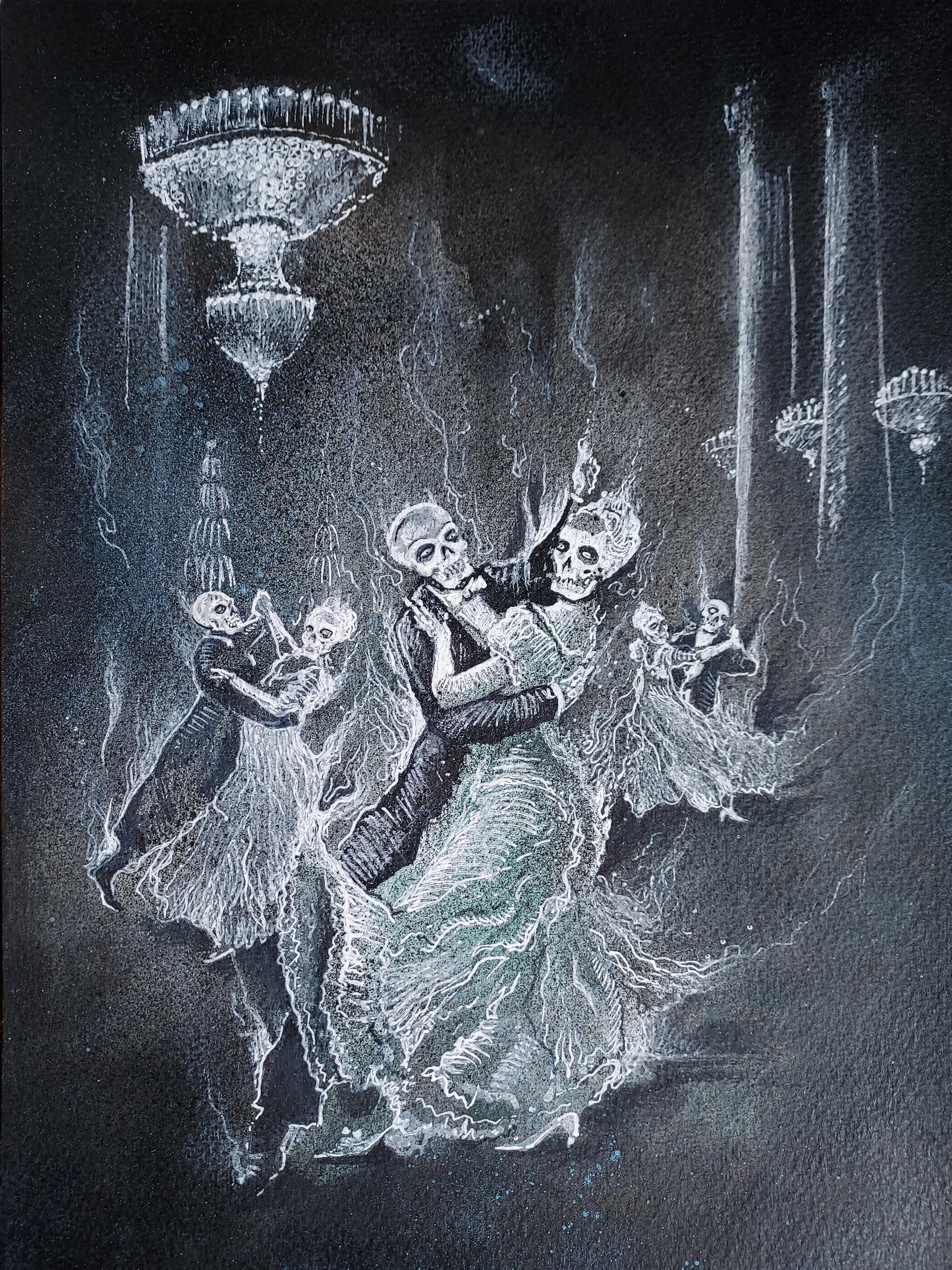
Paul has produced a few A4 prints of the wrapround artwork he created for my collection, Corpse Road Blues.

These are signed and printed on 250gsm paper and are selling for £20. If you’d like one, please contact Paul via his website.
Paul has produced a few A4 prints of the wrapround artwork he created for my collection, Corpse Road Blues.
These are signed and printed on 250gsm paper and are selling for £20. If you’d like one, please contact Paul via his website.
Thanks to my publisher, Dean (at Demain Publishing), being a decent human, I had the opportunity to ask the fabulous artist, and friend, Paul ‘Mutartis’ Boswell to work on the cover for Corpse Road Blues. The combination of Paul’s art with the work of Demain’s cover designer, Adrian Baldwin means that we have a gorgeous product worth owning.

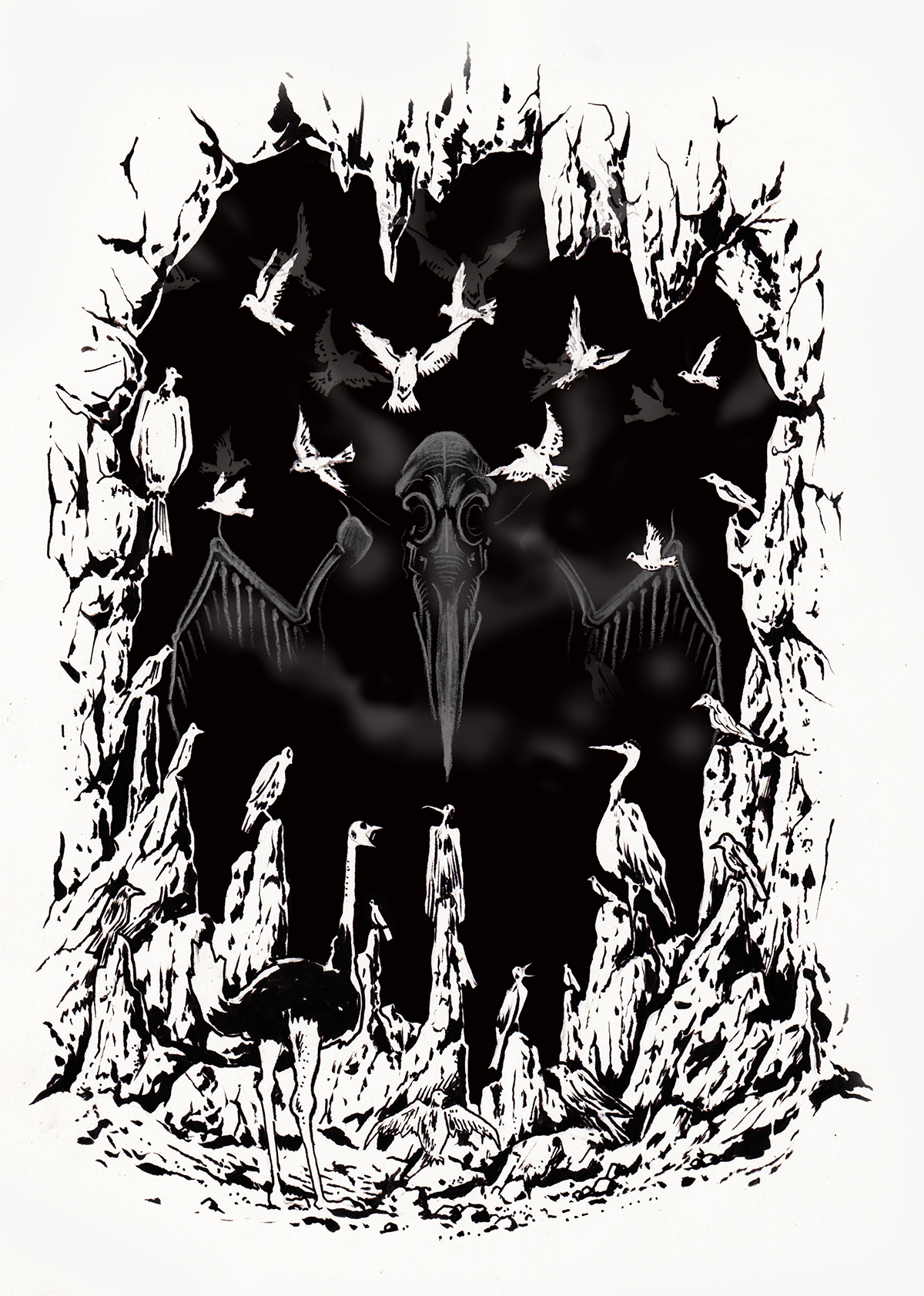
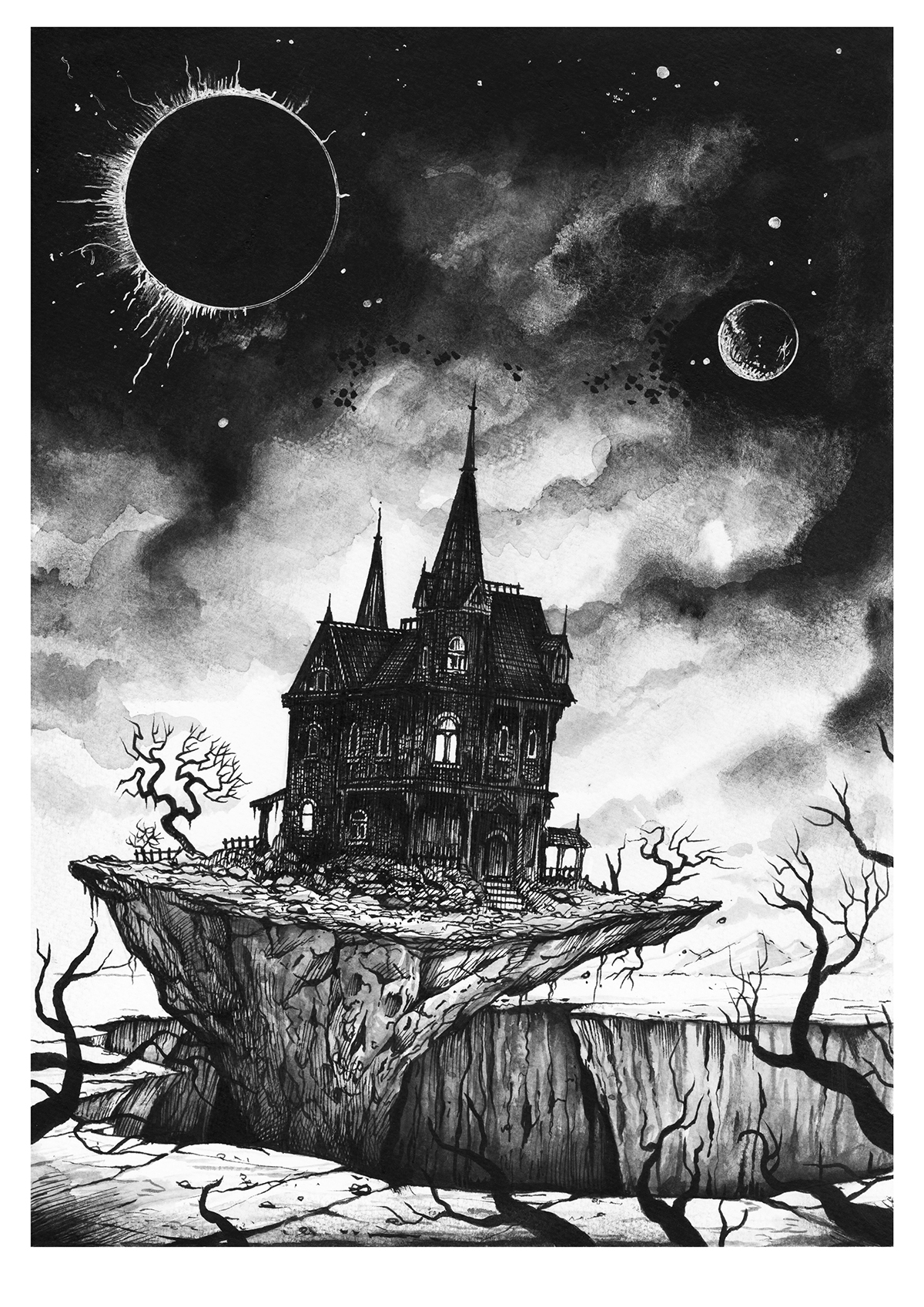
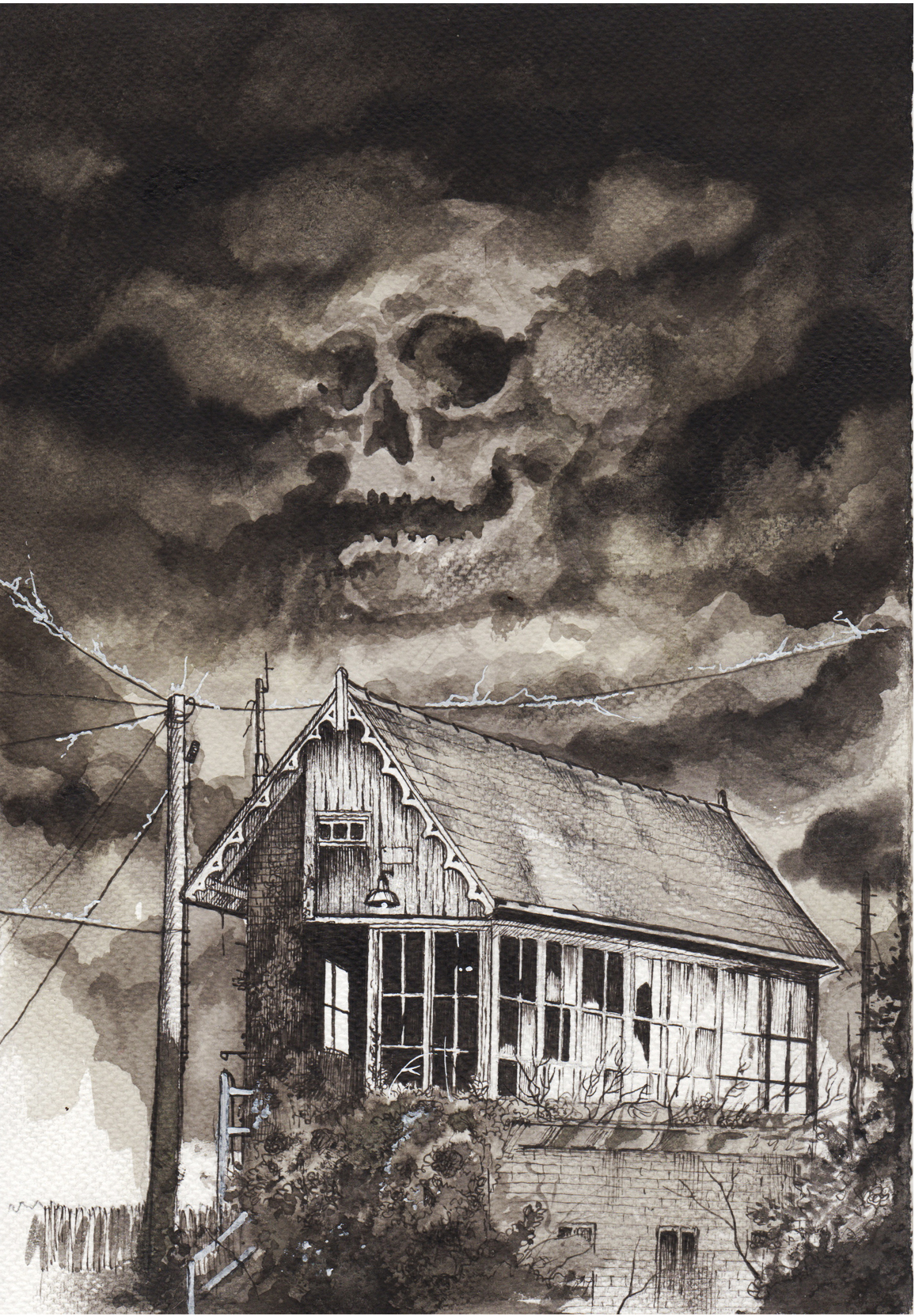
I’d been a fan of Paul’s work for some time and had collaborated with him back in 2020 on Rewilding, a short story of mine that was published in the Call of the Wyld anthology (pub. Wyldblood Press ). It was a great experience that yielded some fabulous artwork, and I knew then that I wanted to work with him on my debut short story collection. You can see more of Paul’s work in the slideshow at the bottom of the page.
Paul is a multi-disciplinary artist currently living in Somerset in the South West of the UK. He’s been involved in many artistic pursuits over the years and was heavily involved in the graffiti art scene in the 1990s through to the 2000s. As well as illustration for album and book covers, Paul runs a successful screen printing company that uses traditional techniques and eco-friendly materials. He’s created art and backdrops for record companies and party organisers on the West coast of the USA, and has been exhibited in Finland (Helsinki), the USA, and France. He also plays the bass guitar for various underground music projects.
Welcome, Paul. And wow, what a career.
Cheers! Yeah, it’s quite mad looking back on all the weird and wonderful artistic missions I’ve done.
Now that we’ve had a brief summary of those wonderful achievements, I’d like to start by finding out a little about the person behind them. How would you describe yourself, artistically?
I guess I’m a conglomeration of many influences that I’ve had throughout my life. It all feeds into the creative output, possibly subconsciously at times. My art is like a big stew of all the weird stuff that’s gone in over the years, my mind is like a sponge that soaks up everything, then I regurgitate it back out as my art.
And does your studio or workplace resemble a huge stew pot?
Ha! Not quite. I have a main studio space in my house which is a bit like a cave and a bit chaotic at times, though I do have a tidying frenzy every so often. I also have a screen printing area in the attic which was originally a flat. It’s a bit more ink splattered than it was previously, especially the shower!
It’s great to be able to have a peek at your creative environment. What are you working on in that space, right now?
I’m working on a number of projects at once, which can be stressful,but also can be very productive as they have tendency to feed into each other. There’s a collaborative book project with two great speculative writers themed around graveyards and the like – some really great gothic and gloomy imagery to play with on that one – a couple more weird fiction book projects, and my ongoing screen printing projects. I am also working on a mural project with some of the youth in my home town of Frome which is quite rewarding.
The mural project sounds fab. More about that please when you can share the details. With reference to the book projects and cover art, can you tell us a little about your approach? Do you read the stories first, follow a brief, or does it depend?
A bit of both really. I like to read the story first to see if anything visual leaps out and then I’ll make very quick doodles/sketches and/or notes, which I’ll sometimes develop. I like to get a feel for the general atmosphere and tone of the story, so reading it first is very helpful. Sometimes the client/author will have a strong idea of what they want visually and it’s up to me to interpret that vision. Either way can work, I guess. Though sometimes it can be a bit tricky to visualise what someone else is seeing in their mind’s eye. Often it works well, but occasionally it can be difficult.
As we’re all individual, I imagine trying to tune into a client’s wavelength can be quite challenging. What approach do you generally take when working on your own stuff?
I guess I’m on the lookout for strong visual cues, generally. Sometimes I get these just walking around, or often when I first wake up I will have a strong idea and have to pursue it in a drawing. If I don’t get it down quick Ill forget the idea.
Ha, I know what you mean. I have a bedside notebook, and several more dotted around the house. To an extent, I guess we’re always working. Even when I’m not physically writing, I’m thinking about writing projects. How do you manage a work/life balance?
I’m really lucky to be able to work from home which means I can be a bit flexible with my time. My screen printing set-up is in the attic, so if I need to do any printing it’s just a matter of walking upstairs. My actual art studio is another room in our home, so everything I need is pretty much in-house. I get a lot of printing done when my young kids have gone to bed.
What about creative blocks? I suffered one recently and that was scary. Do you have techniques for overcoming it?
Keep going! To be honest, I often have creative slumps, but I have found introducing something new into the mix can help, like using a new medium or just stepping away and doing something different like going for a bike ride, or reading, or going to the pub! Just trying to get a fresh perspective on things really.
I like the term ‘creative slump’, less negative than ‘block’. I guess working on multiple projects like you do can also help keep creative.
Yes, and I definitely have a tendency to juggle multiple projects, which on the surface can feel quitestressful, but I feel it also gives a sense of momentum and one project can help to inform another. It’s good to be busy and feel like you are on a journey with a few projects on the go.
I’ve always thought your work to be a rather fabulous blend of the eldritch and the peculiar. Tell us about your influences?
I’m very influenced by stuff I was exposed to as a kid and childhood experiences. I grew up in the70s and 80s and culture seemed exciting, weird, and interesting. Horror was a big thing in the form of movies, TV, and comics, and Horror in the 70s seemed to permeate all aspects of culture. My mum used to buy me those Horror movie books that were popular at the time with stills of classic movies, and I think this helped to instil a gothic sensibility which has stuck with me.
I was also strongly influenced by TV in the 70s which seemed pretty weird looking back, stuff like Jon Pertwee and Tom Baker’s Doctor Who, which was pretty far out in those days. What we now call ‘Folk Horror’ was prevalent in TV shows like Children of The Stones, The Owl Service, and many other programmes apparently aimed at kids. I think my generation was exposed to lots of weird, experimental stuff post 1960s and it had a huge impact, for me anyway. So, I think I was influenced by the culture around me and my sponge-like brain soaking all this weird stuff up.
The 70s were interesting to say the least. I remember the Public Information Films broadcast in the UK back then. Strange times.
Are there any artists that have been influential?
I think some of the underground cartoonists from the late 60s piqued my interest like Robert Crumb and S. Clay Wilson who were pushing boundaries and taboos. I like some of the darker fantasy artists especially Ian Miller who has a very dark and organic style which I can really relate to. And while I think of dark/organic art styles, HR Gieger is someone I was very drawn to early on. I think I enjoy atmospheric art mostly that conveys a sense of emotion and feeling.
How would you define your style, and how much has it changed over time?
My style is a melting pot of many influences but I guess some common threads in my style tend towards the organic, gothic and atmospheric.
I have been into and tried out many different artistic approaches over the years, but I tend to get bored quite quickly so I have tendency to try different things. I was always into crazes as a kid, I was also really into comics so I think that really fed into my style. Later I embraced graffiti culture and got into that enthusiastically. I think graffiti encouraged me to bring more of myself into my work. There is a view that the best artists are the ones that are best at being themselves and that shines out. I think that’s where the magic is.
I think my work has changed and developed a lot, but I seem to keep coming back to the gothic and organic darker nature stuff.
And please keep doing that!
Most of us like to improve, both on a personal level and a creative one. How do you think one can improve as an artist?
Stick with it if you want to get better. It’s all in the doing of it, I think. Sometimes when I start it feels awkward and lacks flow, but keeping doing it seems to create breakthroughs. You can’t always expect fantastic results immediately so yeah tenacity is a fundamental thing, I think. Practice! Try and draw or create everyday even if it’s 10 minutes.
I found life drawing through lockdown really upped my drawing game. Try drawing things that push your observational skills.
Take a deep breath and draw!
I’m a firm believer in that, too. I’ve recently heard about meta-learning, which is all about learning to learn and the techniques that help one be successful in learning things.
How do you define success as an artist?
I think creating something you feel proud of, that’s it! Money is great and necessary, but financial rewards can feel quite hollow in comparison to actually creating work you feel good and proud about. I have a sense of inner well-being if I know I’ve created something successful.
Is there a work of yours of which you are particularly proud?
I don’t think I have one single work that I’m particularly proud of, but I think some of my earlier graffiti work, where I was pushing boundaries, worked pretty well and I still like it now. Equally, some of my more recent book covers and illustrations I’ve been pretty pleased with. I think if you can look at a piece of art that you made a few years ago and it still feels strong then it must have something. I’m quite critical of my own work and can usually see room for improvement.
I think, creatives tend to be self-critical – a curse in some ways, but also a useful tool.
We’re down to the last two questions, Paul. Firstly, what would be your dream project?
Not sure, but I can think of a few projects I’d like to do. Maybe creating more cover art for bands I really like, the Finnish experimental rock band Circle for instance, who I listen to a lot! Maybe illustrating some classic writers like Clark Ashton Smith or Fritz Lieber.
And finally, what’s next for you?
I currently have two illustrated weird fiction and poetry books I’m in the middle of, which could do with being completed. A lot of events coming up this year like the Satanic Flea Market in Islington where I sell my wares like t-shirts, books and prints. More alternative markets and conventions like the World Fantasy Con in Brighton where I’m part of the art show. Lots more screen printing and drawing.
It’s looking like a busy year ahead.
It certainly does! All the very best with it, Paul. Many thanks for chatting with me.
Thanks for asking me to do it, it’s a good exercise I think, it gets you thinking ‘why am I actually doing this?’.
If you’d like to know more about Paul’s work, keep updated with his various projects including the community mural project, then check out his places: website, Instagram, and Facebook.
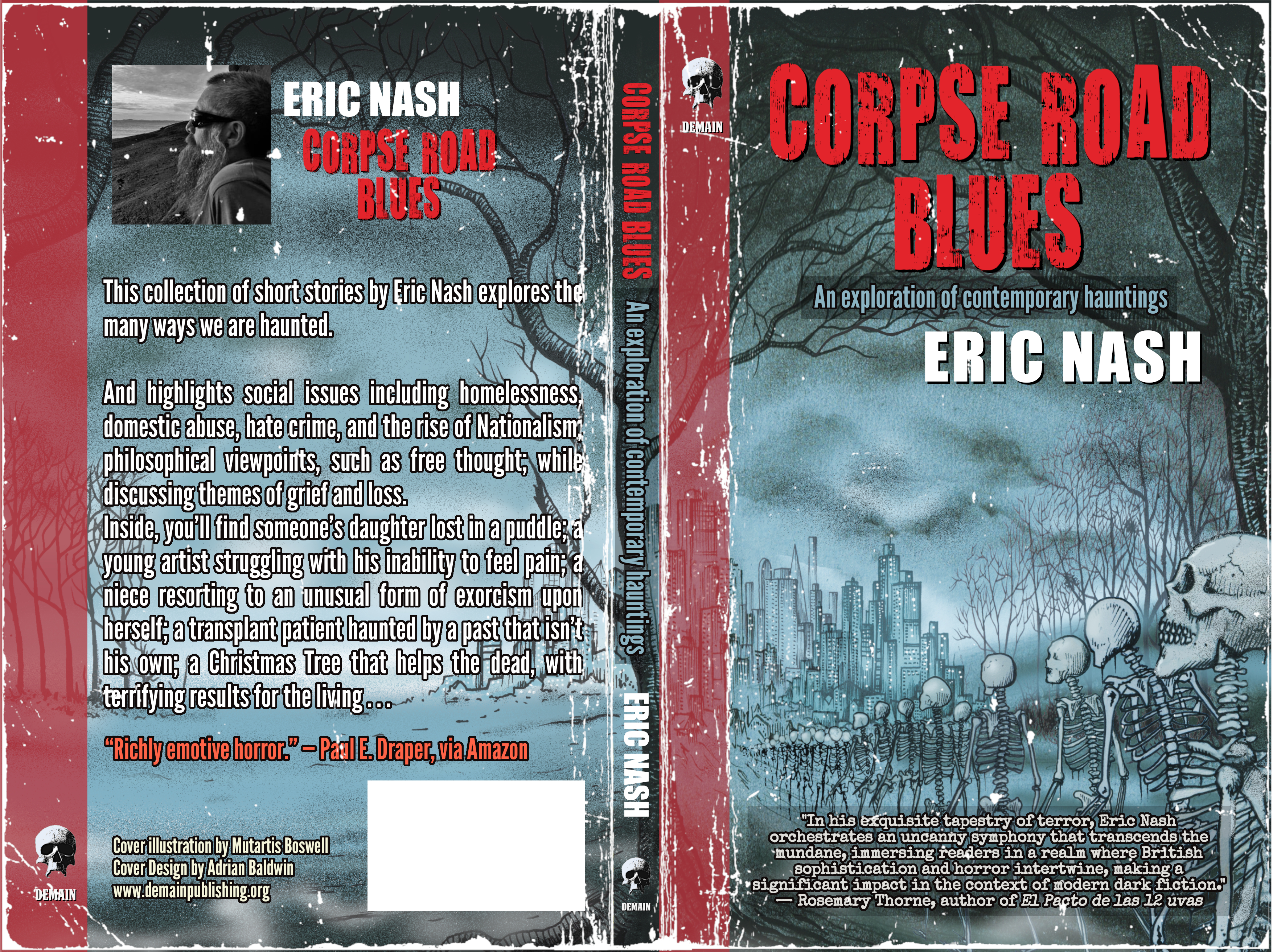
Corpse Road Blues, my first short story collection, is available in both paperback and ebook formats.
Fifteen original and previously published stories that explore what it means to be haunted; fifteen spectres, wraiths and shades lost on the old corpse road; fifteen chances to find peace.
“This is a fine collection of short dark tales. Eric Nash balances the grim with the soulful as real emotion interweaves shadows and elements as disparate as Greek mythology, marginalised community bigotry, voyeurism, body horror and rural folk creepiness.” Paul E Draper, author of Black Gate Tales.
“…so brilliantly horrible, it’s left some mental images that are going to be lingering for a very long time! I’m having to take a bit of a breather in-between each story, they really do pack a punch. But that’s no bad thing, writing this good should be savoured rather than all gobbled down in one go.” Steph Lay (author of Taking the Red Ways).
The paperback comes with a vintage wraparound cover designed by Adrian Baldwin, illustated by Mutartis Boswell. It is published by Demain Publishing.
Bonus material – if you’re a fan of origin stories, then there’s a series of posts on the blog that discuss the inspiration for each story in the collection. There’s also a Spotify playlist dedicated to the book, and if you have your own choice of songs that fit the stories, let me know, I’ll add them to the playlist.
Monster
noun
c1375–
Originally: a mythical creature which is part animal and part human, or combines elements of two or more animal forms, and is frequently of great size and ferocious appearance. Later, more generally: any imaginary creature that is large, ugly, and frightening.
5.
a1505–
A person of repulsively unnatural character, or exhibiting such extreme cruelty or wickedness as to appear inhuman; a monstrous example of evil, a vice, etc.
(source: OED.com)
I’ve been looking back through my fiction archive and am currently in the process of putting together [cue the obvious drum roll] another collection. This time I plan on moving away from the ghostly theme that I explored in Corpse Road Blues, and celebrate the monster genre from its Gothic roots to modern reimaginings.
As with my previous collection, the idea would be to include both published and original work.
The project is still in the early stages, so we’re no way near a publication date, but I wanted to share the news as I’m stoked to be working on it and look forward to the monstrous volume cursing your bookshelves sometime in the future.
I’d be curious to know what monsters you’d like to see in the new collection, or in fiction generally? Let me know your suggestions in the comments below.
Best,
Nash
Thank you so much!
to anyone who has bought my short story collection, Corpse Road Blues: an exploration of contemporary hauntings.
to anyone waiting for the paperback realease in April.
to anyone who has bought any of the books that feature my short stories.
and if you’ve reached out to let me know how much you liked Corpse Road Blues or if you left a review, please know that you’ve helped me continue to write.

Good things are trickling in regarding Corpse Road Blues.
Steph Lay (author of Taking the Red Way: stories from the dark side of Milton Keynes) wrote:
“so brilliantly horrible, it’s left some mental images that are going to be lingering for a very long time! I’m having to take a bit of a breather in-between each story, they really do pack a punch. But that’s no bad thing, writing this good should be savoured rather than all gobbled down in one go.”
Paul Draper (author of Black Gate Tales) wrote:
“This collection is terrific! Well worth picking up. Some truly creepy stuff in here. Written with skill and heart”.
Paperback due out in April.
Pub. Demain Publishing
If you’ve missed the posts detailing the origins of each story, clink for the first in the series: When the Sun Shines.

Aglaope’s Song is Silence Now is the last story in my collection, Corpse Road Blues: an exploration of contemporary hauntings (pub. Demain Publishing). The ebook is out now, and thank you very much to those who have already bought the book; I do hope you’ve enjoyed it. If you’re holding on for the paperback, we’re looking at April. A publication date will be shared when we know one, so keep an eye on the blog, or on mine and Demain Publishing’s socials, for news. Hopefully, I’ll be putting together a few extras in time for that date as well.
So, Aglaope’s Song is Silence Now. What a ghastly tale!
Aglaope is one of the Sirens in Greek mythology. Originally, the sirens represented the dangers of the sea, but have since become symbolic of the supposed dangers of lust and temptation – and the ‘female temptress’.
When the #MeToo movement went viral, it highlighted the shocking extent of sexual harassment in society. I knew I wanted to incorporate this into a story, possibly using the Siren myth somehow, but wasn’t sure where to start.
It took another unrelated event – overhearing a work colleague recalling an incident he’d experienced – for Aglaope’s Song… to make it onto the page. After driving home from work late one evening, my work colleague turned off the engine and remained in their car, taking a moment to gather their thoughts and process the events of the day before going into the house to greet their partner and children. About five minutes in, they noticed a man walking along the residential street toward him, checking each car door as he passed. After some moments had passed, enough to be confident of the stranger’s intentions, my colleague made to confront the man, but as soon as they exited the car the man spotted them and ran off. Somewhat surprisingly, the main protagonist in Aglaope’s Song is Silence Now is based on that opportunist thief skulking in the shadows. What does the night and a Siren offer this man?
Find out in Corpse Road Blues.
As always, thanks for reading.
Nash

Back in 2007, twenty-year-old Sophie Lancaster and her boyfriend were brutally beaten on the streets of Britain. Sophie later died of her injuries. They were attacked for being different, for being part of a subculture. After this tragedy, her mother started the Sophie Lancaster Foundation to “combat prejudice and intolerance” and has been fighting tirelessly against hate crime. They do a lot of excellent work in schools and the community. I think about Sophie and the Foundation a lot, especially as I still consider myself part of that subculture, and as a teenager experienced some of that hatred.
Police Recorded Hate Crime figures have increased by over 100,000 in the decade between 2013 and 2023 (source link). Whether it’s for being a member of a subculture, like Sophie, being a member of the LGBTQ+ community, or being a different race or religion, victims of hate crime are everywhere. We have a problem. Be kind. Educate yourself.
A Safe Place is a reaction.
To know more visit Stop Hate UK, the LGBT Foundation, The Sophie Lancaster Foundation.
Let’s climb to the top of Midwinter Hill.
In the book, The Hidden Life of Trees (pub. Greystone Books, 2015), Peter Wohlleben talks about how trees are connected to one another: that beeches for instance “are capable of friendship and go so far as to feed each other”; trees become friends that “communicate by means of olfactory, visual, and electrical signals”, and “warn each other using chemical signals sent through the fungal networks around their root tips.” Despite being an enthralling read, this didn’t really surprise me – after all, the entirety of the natural world is interconnected – but with every page I turned, something stirred in the rich soil of my imagination.
By writing these short introductions, it struck me how there’s usually at least two unrelated things that unite to create my stories. For instance, while reading Wohlleben’s book, I overheard a work colleague discuss his plans for the coming Christmas. His mother had passed away that year, and, as she had loved the holiday so much, the family were keen that she still took part in that year’s celebrations. They agreed that they would decorate her grave with a Christmas tree.
Before I knew it, On Midwinter Hill was drafted. Since then, the story has had multiple title changes, been a tale told in reverse, then finally the version found in the book.
If you’d like to read it, and the other stories, you can buy Corpse Road Blues here.

Just a quick update. Beginning next week on here and over on Instagram, I’ll be posting the origin story of each ghastly tale in my collection, Corpse Road Blues, as … Continue reading Love origin stories?







 Eric Nash