Tag: writing

Tales From The Graveyard

(some thoughts on my editorial role for North Bristol Writers)

The third North Bristol Writers anthology, Tales From The Graveyard, had its launch on Saturday 2nd March at the cemetery that inspired many of the featured stories. If you came along, thank you, if not, you missed a couple of relaxed and insightful hours.

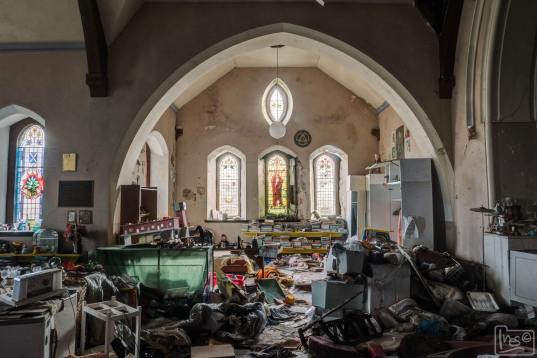
Way back during October 2017, we held a storytelling evening, entitled Tales From the Crypt (yeah, I know – we’re working on originality, I promise), in the Anglican chapel at Arnos Vale Cemetery as part of the Bristol Festival of Literature, and from that sold-out evening the anthology was born.

TFTG launch promo

The editorial team was agreed and consisted of myself (Acquisitions Editor), Pete Sutton (Senior and Copy Editor), and Ian Millsted (Assistant Editor, better known as Devil’s Advocate). Though one can argue how much acquisitioning is active in a submission call sent out to members of the NBW group and a few other Bristol writers, at times the use of a third editor in tipping the balance proved vital.

It was never the intention for the anthology to be horror-specific – yes, Pete and I both write in the horror genre, but there aren’t many more in the group who do – so the writers’ brief was kept suitably broad: the story must be set in a graveyard and contain a ‘weird’ element. And while the book contains ghosts, the Gothic, and a splattering of gore, it also has surrealism, pulp, humour, fantasy, and dystopia.

The content and individual word count of the accepted stories ended up so varied, that creating a TOC with enough momentum to keep pages turning filled me with a Lovecraftian dread. However, with a little research and a little more determination, the task turned out to be highly enjoyable. One could even suggest that the stories organised themselves.

The important first slot went to Kevlin Henney’s quick story for its strong opening that provides a philosophical slant which really works for, and certainly does no harm to, a book full of dead people. This bled into a murd’rous stab of fiction penned by the chilling Clare Dornan. The epics (of which there were a few) I spread throughout the book so their length would hopefully go unnoticed. The first of these, Chrissey Harrison’s fantasy action/adventure contrasts perfectly with the preceding stories. Next, two ghostly tales with child protagonists: Jon Charles’s simple tale followed by Louise Gethin’s wandering child which then ties into the gruesome wandering husband in Grace Palmer’s piece. I thought the reader now ready for a change, thus Darkfall by Dev Agarwal submerges all who feast upon it into a truly bleak dystopia. Then up for a gasp of putrid air with Amanda Staples’s creepfest, followed by the two more unusual stories of our anthology courtesy of Ken Shinn and Jay Millington. Placing both centrally highlights the differences between the two, and the rest of the book. They also act as “tentpole” stories (John Joseph Adams, source below*). Of course, what type of graveyard fiction does not contain Gothic? Behold, Chloe Headdon’s contemporary and Scott Lewis’s traditional tale. Both make an appearance in the latter part of the book allowing the reader to experience other aspects before this ubiquitous theme. Shock horror, courtesy of Grimdark queen Maria Herring, felt a natural follower-on from this, partnered with Tanwen Cooper’s seedy tale of rotten humanity. The last stories mirror the two openers, and are intended to leave positive flavours lingering on the reader’s palate; Piotr Świetlik’s humour and multiculturalism (both much needed in the world at present) and Alex Ballinger’s hopefulness. Ballinger’s ‘Messenger’ is philosophical and resonates with Henney’s opening story.

With the publication of the book, we now have a sexy little bunyip of a product that has been presented beautifully by the Typesetter (and writer), Harrison, and all wrapped up in a classic cover designed by Fabrice Mazat. And, of course, my editorship has come to an end. I’d like to thank North Bristol Writers for the opportunity to become part of this terrific book, and the insights into the other side of publishing.

*With thanks to John Joseph Adams and Cat Rambo for their articles on editing.

You can purchase Tales From The Graveyard on Amazon UK

Previous North Bristol Writers anthologies are:

the DH


The Dark Half of the Year, AmazonUK  (Both Dornan and Shinn had an honourable mention from Ellen Datlow for their stories in this book.)


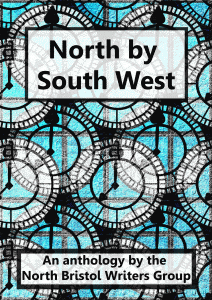
North by South West


North by Southwest, AmazonUK 


How Important is Genre Fiction?

I read in The Guardian on Friday that print sales for literary fiction have remained low since they plummeted in 2010. This ‘crisis’, highlighted in a report commissioned by the Arts Council England (ACE), has the same Council considering to fund this publishing genre.

It would be a mistake, I think, to assume that other genres only reflect society rather than examine it, or do not have anything worthwhile to say, and therefore don’t merit support.

Should we not question ACE’s literature director’s reported comment, “… we are saying that there is something so unique and important and necessary and fundamental about literary fiction in particular, that we need to focus on it and support it.”?

Shouldn’t ACE concentrate on promoting literacy in schools, or reading in adulthood, with the aim to allow the reader, not ACE, to support the authors of literary fiction or any other genre?


Write the Damn Story

stuffed dog
image source: Bad Taxidermy

It was after the ten minutes in which I was debating whether the dog staring out of the cottage window in town today was stuffed like the cat next to it (given the position of the cat – climbing a dead tree branch balanced on the sill of the window – I knew the feline had definitely met with the skilled hand of a taxidermist), that I realised I was procrastinating. With Hashtag Rewilding and On Midwinter Hill both finished and submitted to publishers, I have embarked on a new piece of fiction with the working title of We Are Gathered. The plot has been sussed, research done, scenes organised, and yet I am putting off the actual pen-to-paper, once-upon-a-time, beginning. I cannot think of a logical reason for this (if you can, please let me know). I’m not scared of doing it, it is not writer’s block, yet even as I try to explain it here I am aware that still I have not begun.

The story will not write itself, so please excuse me.


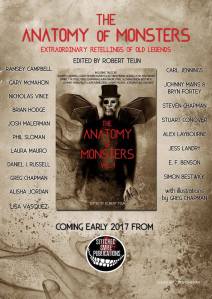
The Anatomy of Monsters vol 2

OPEN NOW FOR SUBMISSIONS:
THE ANATOMY OF MONSTERS VOL. 2
Collected by Robert Teun

(Twitter: @RDTEUN)
$25.00 PLUS COPY
Min word count: 3,000 words.
Max word count: 10,000 words.
Send submissions to: theanatomyofmonsters@gmail.com
DEADLINE: OCT 31ST 2017

THE ANATOMY OF MONSTERS VOL. 2
We’re looking for new takes on old monsters!
What unholy pact did the very first vampire make to become what they are now?
How did Werewolves become slaves of the moon?
Who was the first Ghost in the world and how did they react?
The Mummy, The Hunchback, The Phantom Of The Opera, The Invisible Man, and even The Creature From The Black Lagoon…
How did they come to be?
How do they deal with their new nature?
And who suffers because of it?
This volume will be open to more folklore horror, Witches! Baba Yaga! And many, many more!
I prefer less splatter and more scare.
News will follow on these pages:

The Anatomy Of Monsters Facebook page:https://www.facebook.com/TheAnatomyOfMonster/?ref=bookmarks

Twitter: @RDTEUN

It Has To Be Scary

scary.gif

The submissions call for which I’m crafting a story has a stipulation: Pieces have to be scary. Easy then? No, considering I haven’t been scared by a work of fiction yet.

Though, four authors have come close, so far: Ray Bradbury, Stephen King, Clive Barker and Adam Nevill.

In an earlier post, I mentioned that Bradbury with his short story, The Emissary, and King’s novel, Misery, had managed to give me gooseflesh. This was achieved, perhaps, by their ability to immerse the reader in the story and the characters, in addition to perfect timing.

Barker’s short fiction anthology, The Books of Blood, heralded a new age of Horror for me. These stories were like listening to Iommi’s (et al) War Pigs for the first time; the text glutinous with dread.

With Nevill, it was the building of, and unrelenting, tension in the first part of The Ritual that may have been achieved through the main protagonist’s increasing isolation, as well as setting and pace.

All I have to do with this technical knowledge is apply it … within a 2,000 word frame.

thumbs up.gif